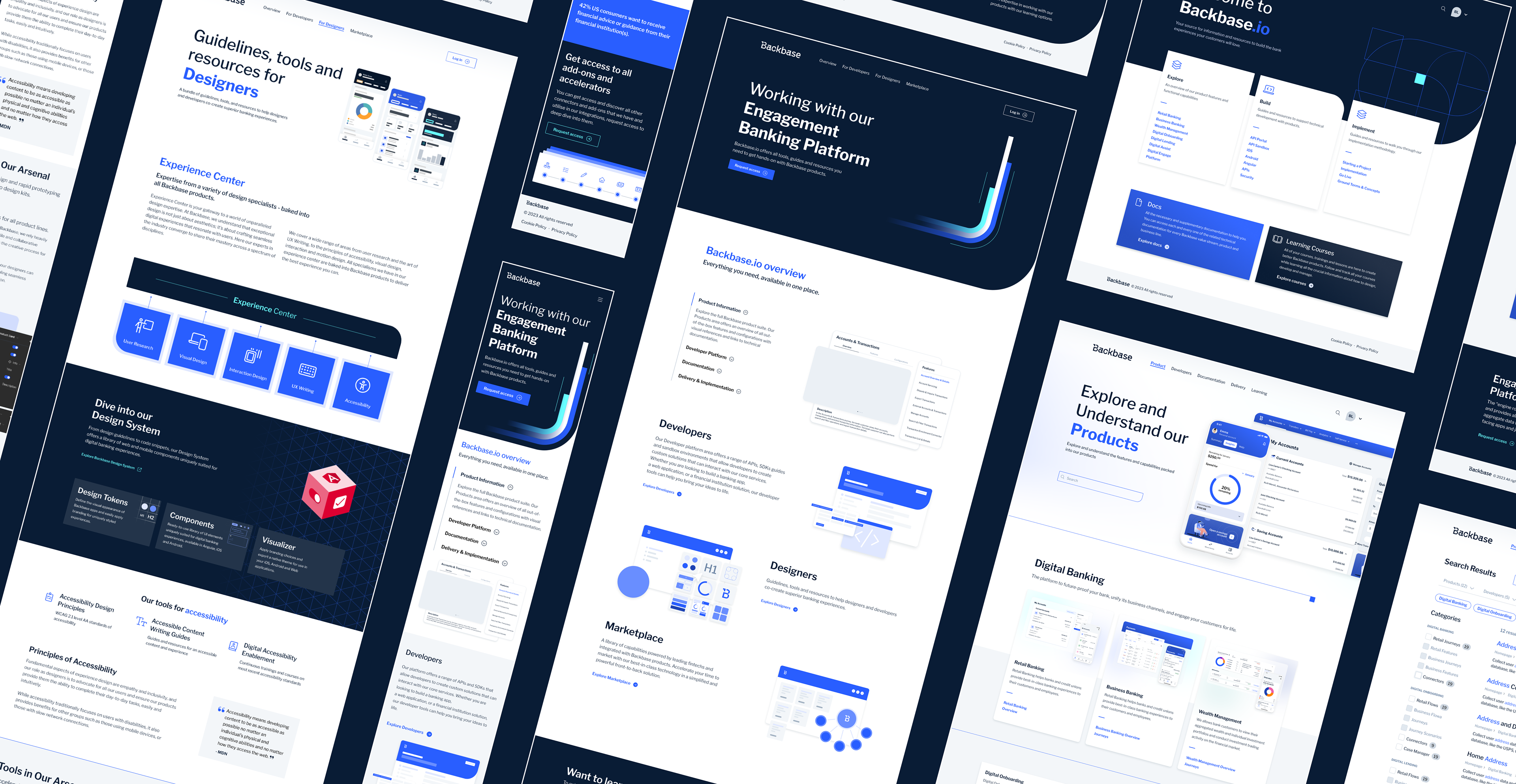
Backbase.io Documentation Platform
Summary
I helped turn scattered internal knowledge into a single documentation platform used by more than 1000 people who use, build and sell Backbase products.
Context and Problem
Context
Backbase sells an engagement banking platform that banks configure and extend. Inside the company, product, engineering, design, delivery, and sales all needed practical guidance on how to work with these products.
What was broken
- Documentation lived across Confluence spaces, PDFs, slide decks, and personal folders
- No shared view of how to implement solutions at clients
- Serious prospects wanted to look past the marketing site and see real capabilities
- Our team operated almost like a start up inside Backbase, without clear proof of value at the start
My role
I joined when Backbase.io existed as a very early prototype. As the UX designer on the team I:
→ Co-shaped the information architecture together with our director and product team
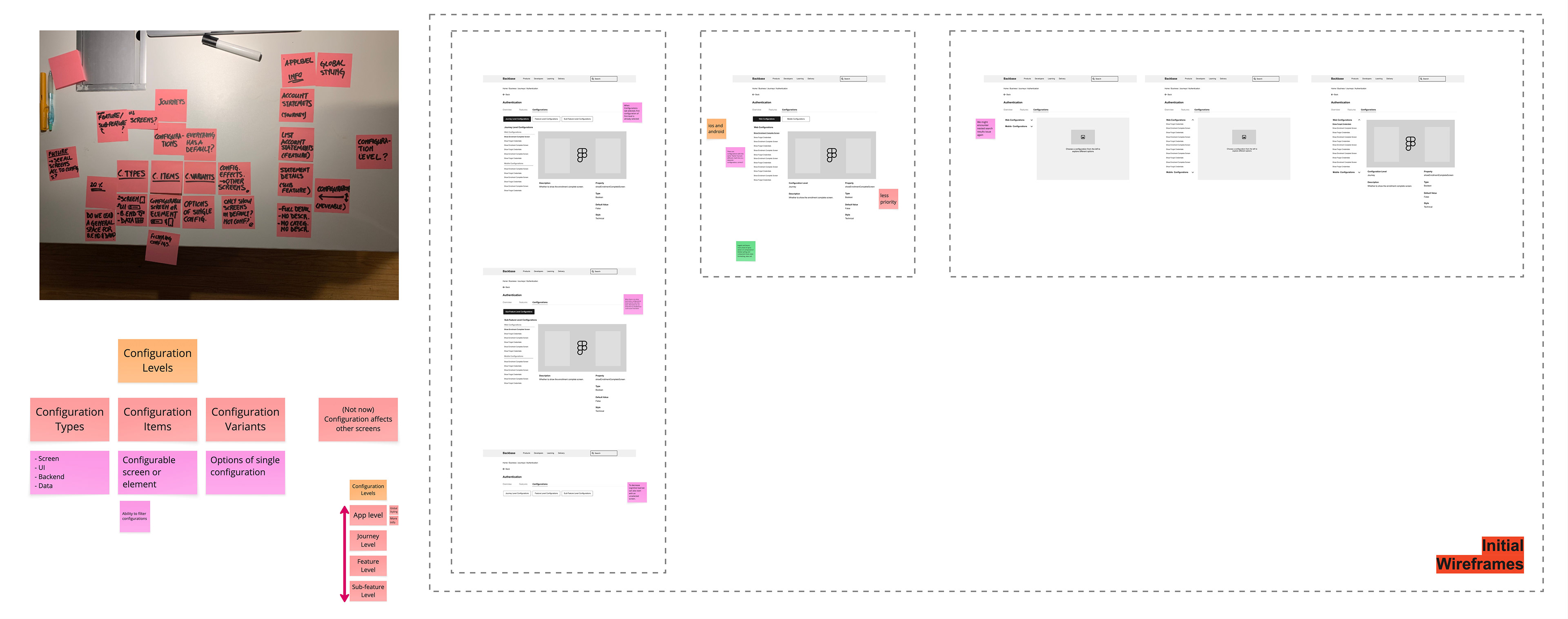
→ Led discovery work (interviews, audits, benchmark analysis, analytics review) and set up interview structures the team could reuse
→ Designed flows and interfaces for the internal docs platform, developer area, designer area, and public preview
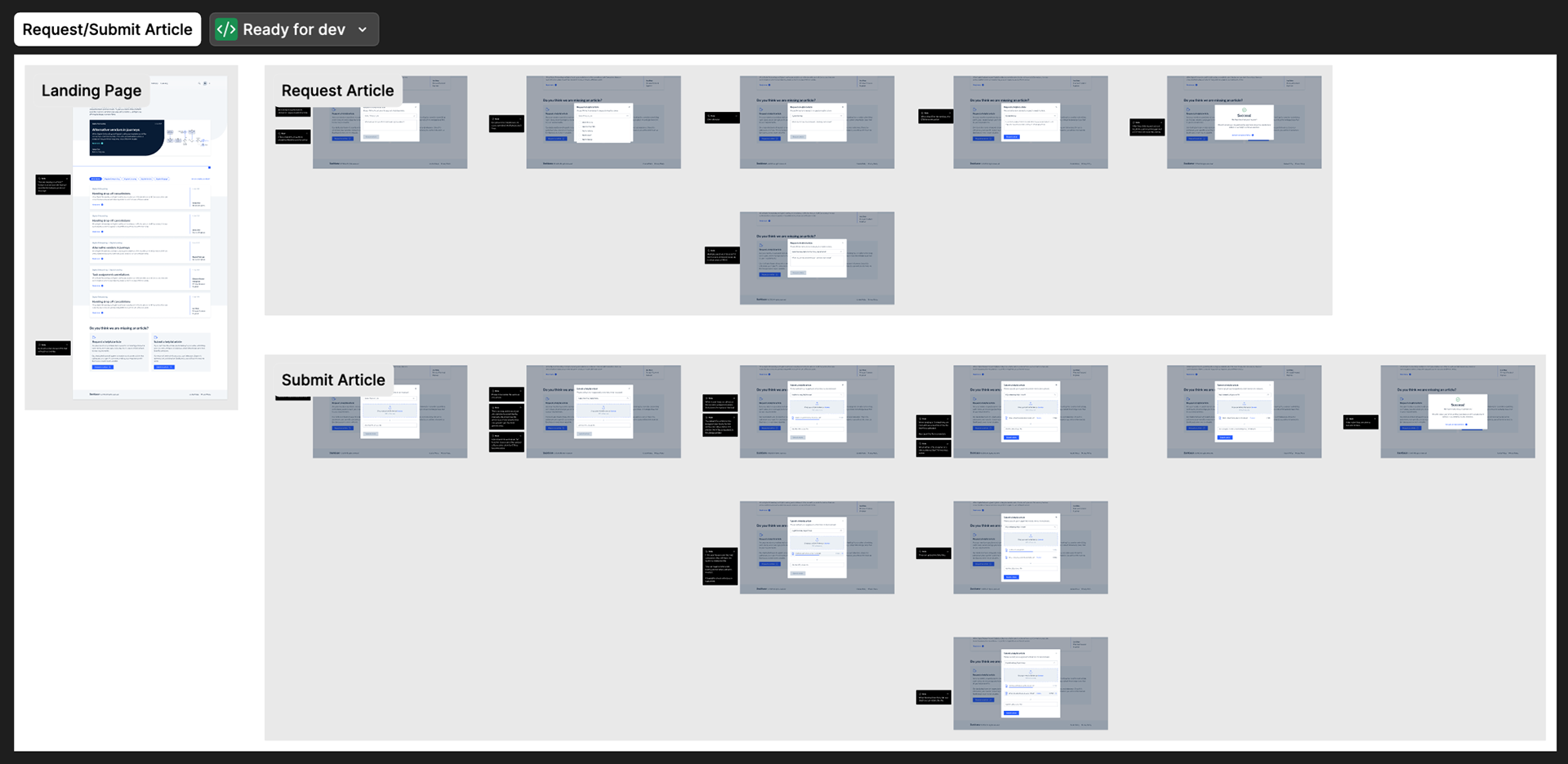
→ Worked day to day with developers to refine behaviour, edge cases, and navigation
→ Maintained and extended the Backbase.io design system
→ Introduced, facilitated, and continuously ran team retros to improve how we worked together
Approach
Discovery
→ Interviewed sales, product leaders, product managers, technical writers, designers, product owners, and tech leads across Backbase
→ Audited existing documentation spaces and developer portals to map overlaps and gaps
→ Looked at other documentation platforms and analysed our early Google Analytics data
→ Synthesised findings into key needs for each role and a first set of information architecture options

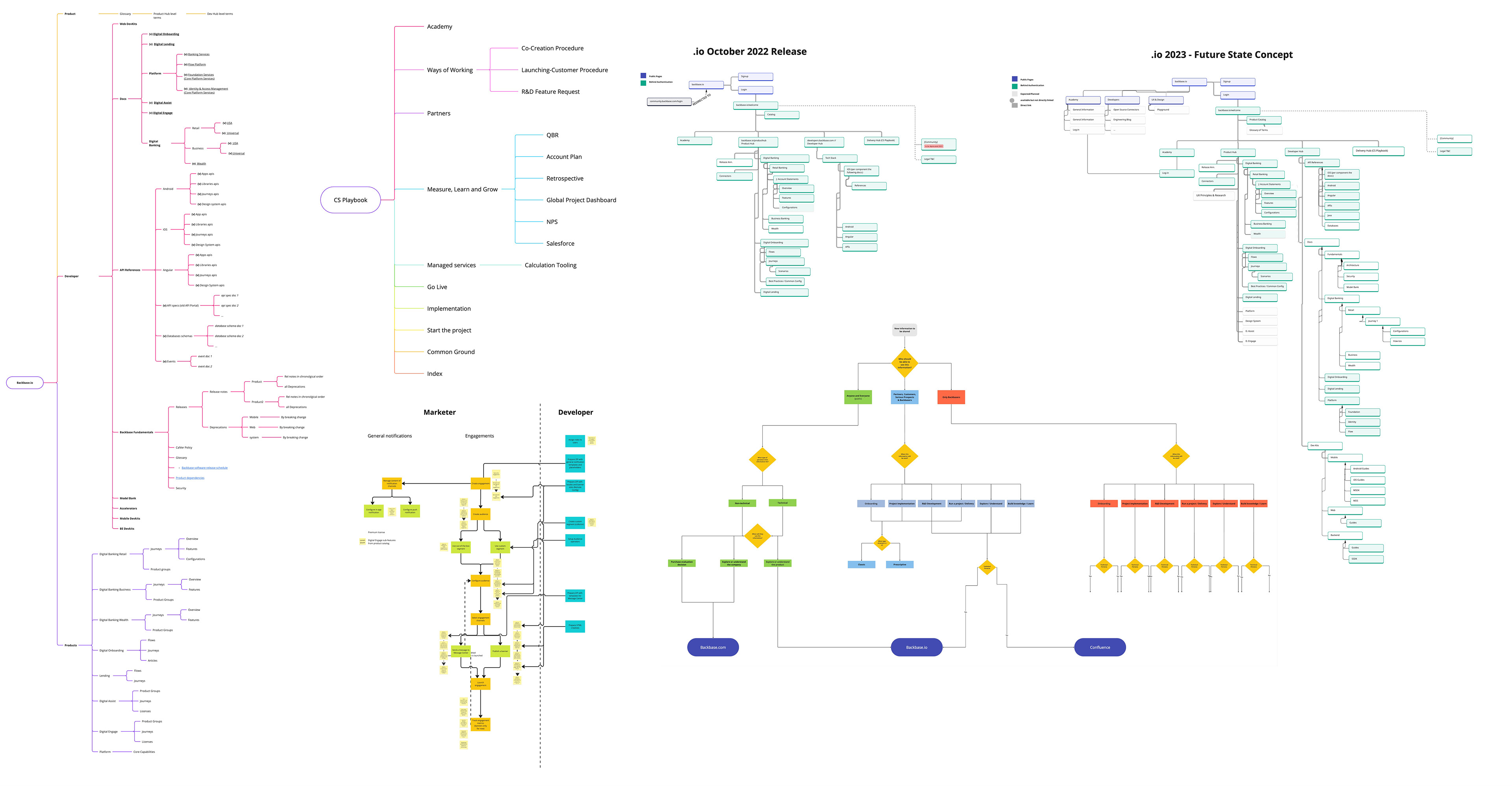
Information architecture and navigation
→ Worked with our director and product owners to define the high level structure
→ Chose a role based entry (Developers, Designers, Products) combined with product line or feature based breakdown inside each area
→ Defined clear separation between internal content and public preview
→ Introduced patterns for persistent navigation and cross linking so people understood where they were
Designing the experiences
→ Designed role specific landing pages for developers and designers with direct access to tools, SDKs, design kits, and best practices
→ Created overview pages that connect product concepts, implementation guides, and APIs
→ Consolidated previous portals into Backbase.io, including the developer platform and design system hub
→ Kept one foundational Figma file as the single source for flows, wireframes, and high fidelity designs that developers worked from
Key decisions and tradeoffs
Role based entry first
Start with internal value, then open up
Developers, designers, and sales all start from different questions. We prioritised role based navigation so each group saw relevant content quickly, then linked down into product specific details.
Version 1 focused on solving internal documentation and enablement. Only after adoption grew did we add the developer area, designer hub, and a controlled public preview for clients.
Lightweight governance over open contribution
Maintain and extend the design system
Rather than letting any team upload anything, we worked with product owners and our content manager to define owners for each area and guidelines for content. This kept the quality high and reduced duplications.
Once the main design system is formed, I owned and set it in our shared foundations and then maintained and extended the components we needed, so the platform kept expanding as such the Backbase.io design system

Outcomes
→ Backbase.io became the primary source of product and implementation knowledge for more than 1000 people in R&D and related teams
→ People became more self sufficient in finding answers, which reduced “where is this document” questions and support load on product and delivery teams
→ Sales teams started using Backbase.io in client meetings to show real capabilities after the marketing narrative, which increased trust with serious prospects
→ The platform grew from a basic docs portal into a unified place that serves developers, designers, and internal teams, while also giving clients a peek through a public facing surface
“The best moment was hearing from sales that they open Backbase.io with clients who want to see real examples, not just marketing materials”
Why this matters for complex platforms?
This project is a good example of how I work on complex platforms with multiple user groups. The problems were not about a single feature or screen, but about how developers, designers, sales teams, and clients all access the same underlying capabilities. I helped build a unified system that improved findability and trust, inside a small team that had to prove its value without direct revenue.